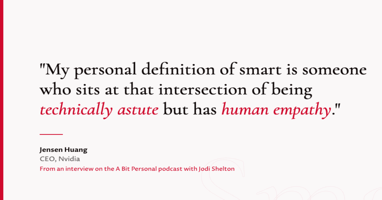
The World Economic Forum surveyed over 1,000 of the world's leading employers for its 2025 Future...
Your AI strategy is only as good as your ability to lead people through uncertainty
There's an assumption quietly running through most AI implementations.
That the job of leadership is to control how AI gets used.
Define the policy. Set the guardrails. Manage the risk. Then roll it out.
It's a reasonable instinct. It's also producing mediocre results.
Mayo Clinic — 76,000 staff, FDA oversight, sensitive patient data at every level of the organisation — had more cause than almost anyone to lock AI down and manage it tightly from the centre.
Instead, their leadership made a different call.
I'm grateful to Mark Cameron for highlighting this example in a recent leadership roundtable.
Mayo Clinic tied it to mission, not efficiency targets, not headcount reduction.
The work people were already there to do: research, science, better patient outcomes.
That connection is what converts compliance into genuine commitment.
MIT Sloan Management Review, which has tracked Mayo Clinic's AI journey across multiple studies, describes it as a large-scale "citizen development" model. AI was put directly into the hands of clinicians and researchers — based on the explicit belief that it is "a tool that needs to be put in the hands of the people with the deep knowledge in the practice." As Thomas H. Davenport and Randy Bean put it: "Mayo Clinic staff members see the data and AI team as enablers, not gatekeepers."
The use cases didn't come from a strategy team. They came from the people closest to the work. Researchers who understood their own constraints better than any central function ever could.
Leadership's role wasn't to decide how AI would be used. It was to create the conditions for the right people to figure that out themselves. Budget, direction, a platform for building and the trust to let it happen.
MIT Sloan consistently describes Mayo Clinic's model as distinguished not by its technology but by its philosophy: enablement over governance.
Their headcount grew. It didn't shrink. Because they were executing on their strategy, not cutting their way through it.
That philosophy is a leadership choice. It's available to any organisation willing to make it.
The question it asks is uncomfortable but clarifying.
Do we trust our people enough to let the answers come from them?
Most organisations say they do. Mayo Clinic acted like it.
That's the kind of leadership capability that can be developed and it's what a session tomorrow with Influential U CEO and co-founder John Patterson is built around.
If you want to understand how to move people through uncertainty, keep trust intact when roles are shifting, and hold teams together when anxiety is real, this session is for you.
Free. 60 minutes. Small group. Registration link here.
In your experience does AI momentum break down on the technology side, or the trust side?
Best regards, Brian